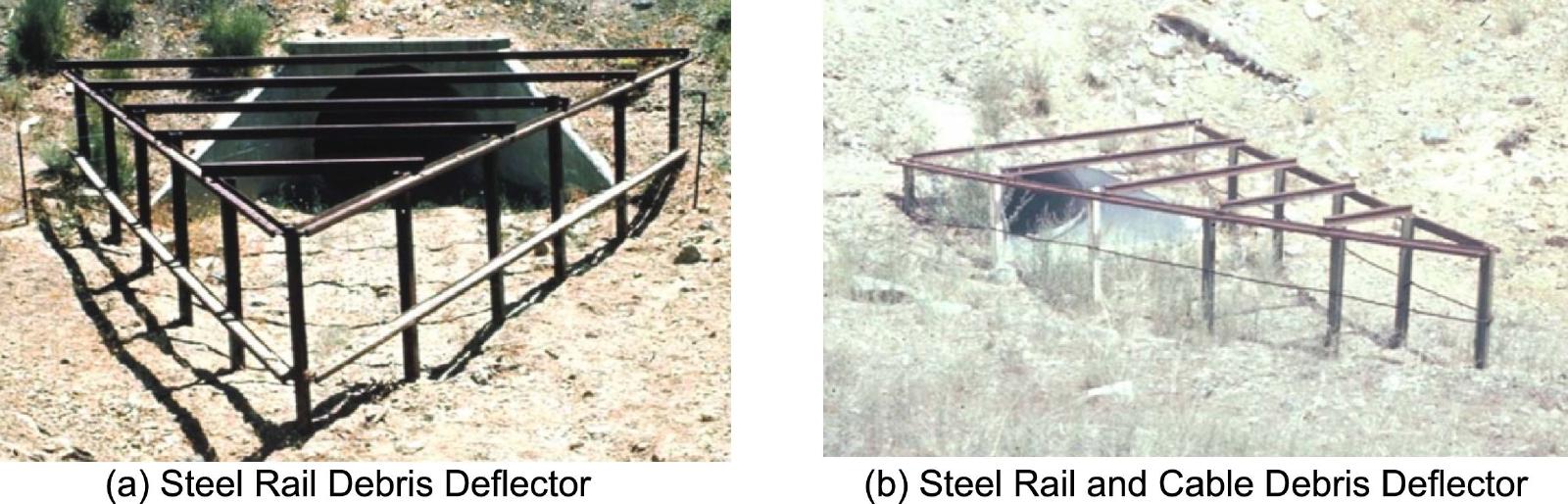
Back Road Inlet Debris Deflector
The existing stormwater inlet kept getting blocked by debris, which created a real flooding risk for nearby properties. The old trash rack wasn’t cutting it.
What I did
I was tasked with designing a new debris deflector and conceptually integrating it with other flood protection measures like extended berms.
Designed a steel debris deflector following USDOT Federal Highway Administration “Debris Control Structures” guidelines:
- Specified re-purposed railroad rails (or equivalent) for structural integrity and longevity - significantly tougher than the existing trash rack.
- Designed a large surface area to maximize debris deflection away from the inlet.
- Used a sharp angle to help debris naturally move to the channel edges for easier removal.
- Set the apex angle between 15 and 25 degrees, with total side area at least 10 times the culvert’s cross-sectional area.
- Followed guidelines for bar spacing relative to the minimum culvert span dimension.
- Made sure that even if the sides get partially blocked, water can still spill over the top into the inlet - no complete blockage.
Flood mitigation: The deflector was one piece of a larger strategy. Combined with extended berms, it would significantly reduce flooding risk to adjacent properties.
Technical approach: Applied the USDOT FHA guidelines for dimensions and bar spacing while adding features to maximize deflection and maintain water flow even under partial blockage.